.png)
Introduction
Bitcoin clawed back above US$64,000 (AU$90,018) this week as the Fear & Greed Index hit 5, which is the most extreme fear reading in crypto history. Sellers are pausing, but conviction remains fragile as gold, silver, and crypto stocks continue sliding. Behind the price action, however, the real story is unfolding elsewhere. This week, we're covering explosive insider trading allegations that could rewrite the narrative of the Terra collapse, a shocking Binance investigation that uncovered US$1.7 (AU$2.63) billion in Iranian-linked transactions and suspended employees, and the battle for the future of finance as Coinbase launches 24/5 stock trading while Meta tests stablecoin payments. The volatility may be deafening, but the infrastructure shift is louder, and we’re here to explain it to you.
Let’s dive in.
What’s Happening On The Wayex Platform
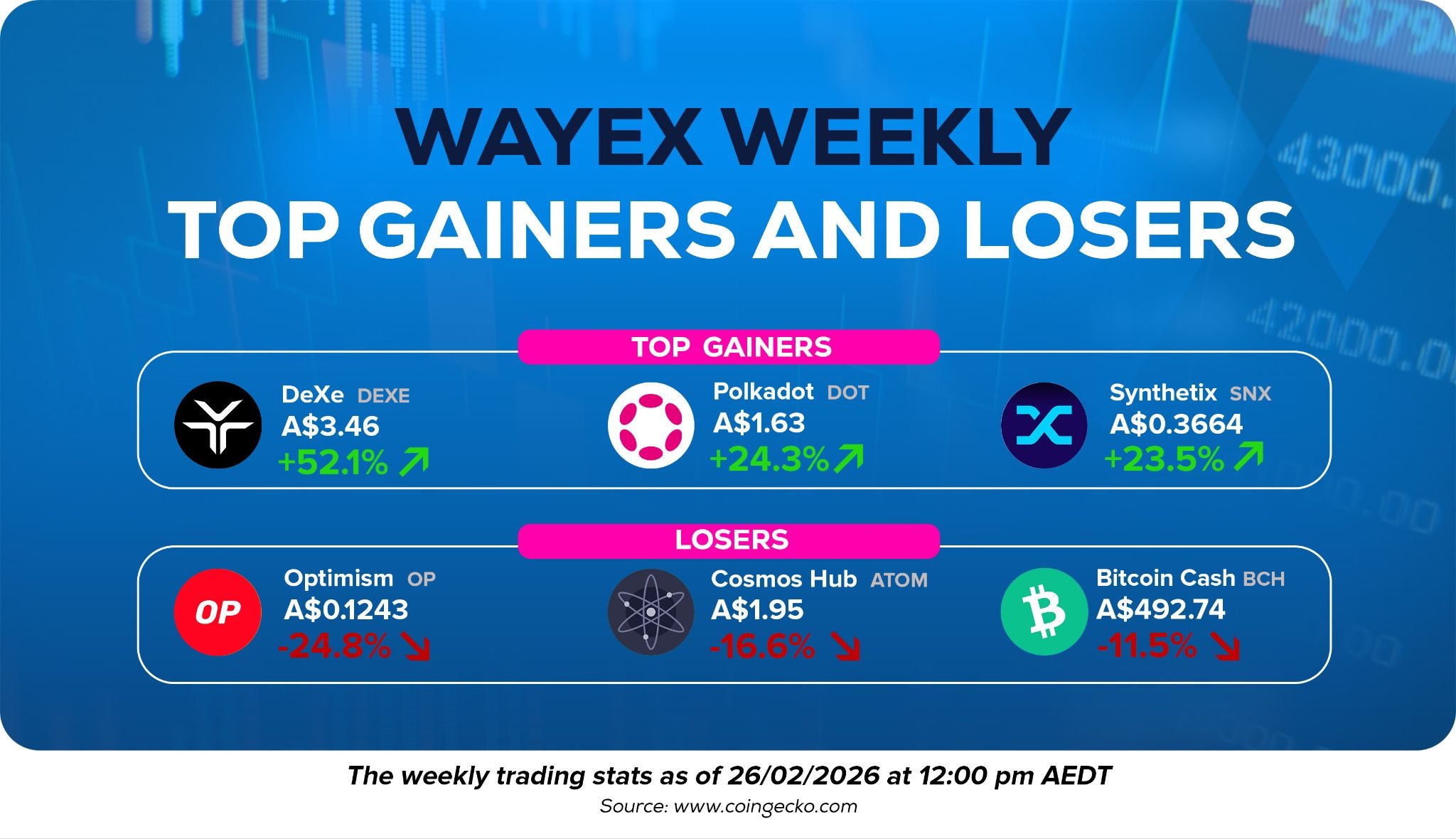
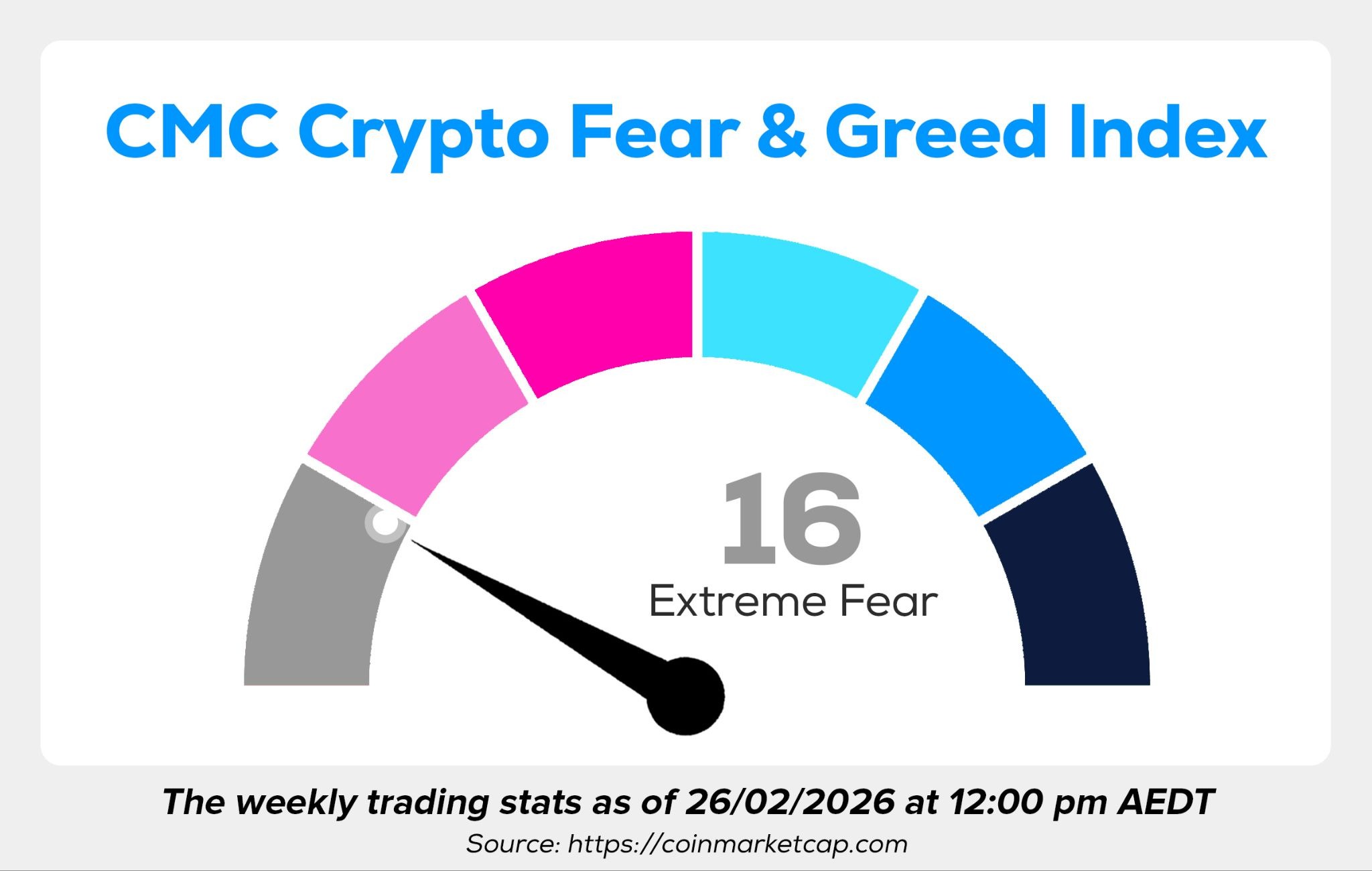
Bitcoin Retakes US$64,000 as Fear & Greed Index Hits Historic Low
Bitcoin pushed back above US$64,000 (AU$90,018) in early US trading on Tuesday (reported on 24/02/1998), tracking a broader rebound in risk assets after several sessions of turbulence. Trading recently at US$64,200 (AU$90,299), Bitcoin was still lower by 0.75% over the past 24 hours but notably above Tuesday’s morning low of US$62,500 (AU$87,908), with Ether (ETH) and Solana (SOL) also narrowing big early losses.
The bounce came as the Bitcoin Fear & Greed Index fell to a level not even seen during the 2018 bear market, the 2020 COVID crash, or 2022's crypto winter, suggesting sellers may be taking a breather at extreme fear levels. On-chain analyst Quinten Francois noted that Bitcoin is currently the most oversold it has ever been, according to the Relative Strength Index (RSI), with the indicator at 14, lower than levels seen during major historical market downturns.
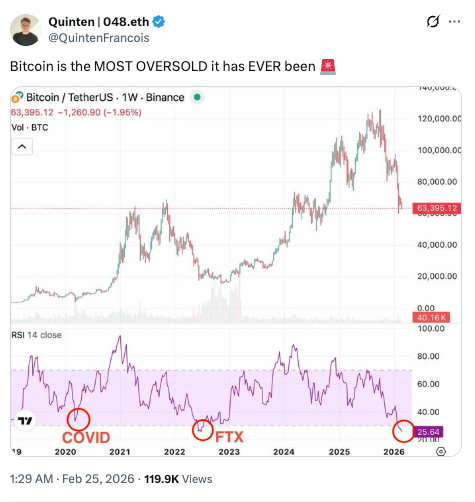
Despite the modest rally, the broader picture remains grim. Bitcoin has lost 20% of its value in February, its worst monthly performance since June 2022. BTC hit its all-time high of US$126,080 (AU$190,538) in early October 2025 and is now trading 50% lower following the shocking liquidation event on October 10. Ethereum (ETH) fell 4% to trade at US$1,830.39 (AU$2,574.51), XRP lost 3.7% to US$1.33 (AU$1.87), BNB fell 4.3% to US$582.24 (AU$818.94), and Solana (SOL) dropped 4.3% to US$76.71 (AU$107.90).
Traditional safe havens also came under pressure. Gold fell 1.42% to drop to US$5,132 (AU$7218.36) per ounce, down from surpassing US$5,500 (AU$7735.96) per ounce a few weeks ago when it hit a new all-time high. Silver gained a modest 0.30% to US$87.06 (AU$122.45) per ounce, though it had also surpassed US$100 (AU$140.65) per ounce weeks earlier. The crypto Fear & Greed Index remains at 9 points, indicating "extreme fear" among investors.
Crypto's tight correlation with technology stocks remained evident, with software shares (as represented by the iShares Software Sector ETF (IGV)), bouncing 1.7% after recent heavy losses. The tech-heavy Nasdaq 100 traded 1.1% higher, while the S&P 500 was up 0.8%. High-performance computing firms and bitcoin miners rallied 6%-10%, with Bitdeer (BTDR), Cipher Mining (CIFR), Hut 8 (HUT) and TeraWulf (WULF) leading gains.
While technical indicators scream oversold and miners rally on AI infrastructure hopes, the broader damage remains severe, with BTC down 50% from its October peak. The bounce may be real, but the bottom is far from confirmed.
Jane Street Faces Terra Insider Trading Allegations as Binance Investigators Uncover US$1.7 Billion Iranian Flow, Then Get Suspended
Two explosive investigations this week reveal the ongoing compliance and legal chaos lurking beneath crypto's surface, even at its most established institutions.
Terraform Labs' bankruptcy administrator has sued high-frequency trading powerhouse Jane Street, alleging it used insider information to front-run trades that accelerated the 2022 collapse of TerraUSD and Luna. The lawsuit claims a Jane Street-linked wallet withdrew 85 million TerraUSD from Curve3pool within 10 minutes after Terraform quietly pulled 150 million UST (before Terraform informed the public), helping trigger the stablecoin's loss of its dollar peg and a US$40 (AU$56.1) billion market wipeout.
Todd Snyder, the administrator winding down Do Kwon's Terraform Labs, is seeking damages from Jane Street's co-founder Robert Granieri and employees Bryce Pratt and Michael Huang. "Jane Street abused market relationships to rig the market in its favour during one of the most consequential events in crypto history," Snyder said in a statement.
The stablecoin lost its 1:1 USD peg in May 2022, and within days, the Luna token crashed to zero, with US$40 (AU$56.1) billion in market cap evaporating in just one week and triggering the collapse of other crypto companies with exposure to the project. Do Kwon was sentenced to 15 years in prison after pleading guilty to two criminal counts.
On May 9 2022, with TerraUSD starting to slip, Jane Street's Pratt sent a group chat to Kwon and team, floating offers to buy Bitcoin or Luna, raising further questions about the firm's knowledge and timing.
Jane Street has denied the allegations as a "desperate" and "baseless" attempt to extract money. "This desperate suit is a transparent attempt to extract money when it is well-established that the losses suffered by Terra and Luna holders were the result of a multibillion-dollar fraud perpetrated by the management of Terraform Labs," a Jane Street spokesman said.
At Binance, a separate compliance crisis unfolded with troubling timing. Internal investigators at the world's largest crypto exchange discovered that people in Iran had gained access to more than 1,500 accounts over the previous year, and about US$1.7 (AU$2.38) billion had flowed from two Binance accounts to Iranian entities with links to terrorist groups, a possible violation of global sanctions. One of those accounts belonged to a Binance vendor.
After the investigators reported the transactions to top executives, Binance fired or suspended at least four employees involved in the investigation within weeks, citing "violations of company protocol" related to the handling of client data.
The investigation centred on a now-defunct business called Hexa Whale Trading Limited, which had used Binance to send US$490 (AU$688) million to crypto wallets tied to Iranian entities. An Israeli official told the investigators that Hexa Whale was financing terrorist organisations such as the Houthis, an Iran-backed militia.
The most significant link involved a Hong Kong business called Blessed Trust, which operated as a "fiat partner" providing payment services to Binance. Over roughly the past two years, US$1.2 (AU$1.69) billion in crypto had flowed from Blessed Trust's Binance account to Iranian-linked entities, with investigators finding ties to crypto wallets controlled by Iran's Islamic Revolutionary Guards Corps, designated a terrorist group by the United States.
The findings came months before President Trump granted a pardon to Binance founder Changpeng Zhao, who had spent four months in federal prison in 2024 for his role in the firm's anti-money-laundering violations. When Binance pleaded guilty in 2023, it agreed to pay a US$4.3 (AU$6) billion penalty and alert US authorities to any lawbreaking detected on the exchange.
A Binance representative, Rachel Conlan, said the exchange took action to address the issues, adding that the company did not find evidence of sanctions violations. The accounts were removed, and Binance notified the authorities. "Any suggestion that Binance knowingly allowed sanctionable activity to continue unchecked is incorrect and defamatory," Conlan said.
Conlan said the investigators were not suspended for "raising compliance concerns" but that "certain individuals" were disciplined for "unauthorised disclosure of confidential client information". However, the timing, which was not long after the Iranian transactions were reported, raised questions about whether the discipline was connected to the findings. Over the last few months, more than half a dozen compliance officials have left Binance, including a sanctions manager and the leader of the enterprise compliance team.
Together, the Jane Street and Binance cases underscore a sobering reality: even after billions in fines, high-profile convictions, and regulatory scrutiny, the gap between crypto's compliance promises and its operational reality remains dangerously wide.
Coinbase Launches 24/5 Stock Trading, Meta Tests Stablecoin Payments, and AI Agents Get Crypto Wallets. The Infrastructure Wars Heat Up
While regulators chase yesterday's scandals, the industry's biggest players are racing to define tomorrow's financial rails. This week brought three developments that signal where crypto infrastructure is heading: traditional finance integration, mainstream stablecoin adoption, and a legal frontier no one is ready for.
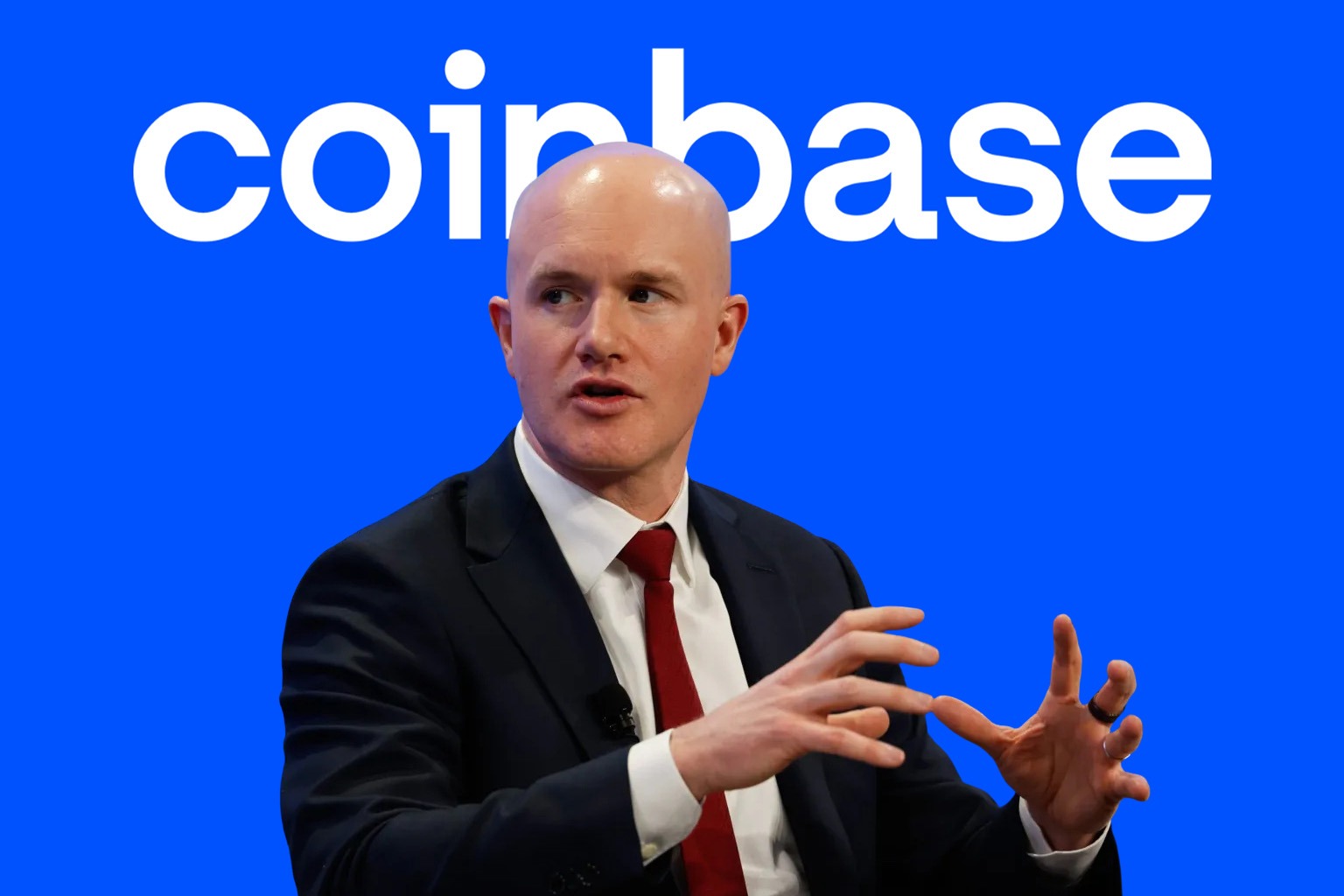
Coinbase has opened stock and exchange-traded fund trading to all US customers, expanding beyond digital assets as it pushes to become what it calls an "everything exchange." The rollout allows users to buy and sell US-listed stocks and ETFs on the same platform they use for crypto, with trading running 24 hours a day, five days a week, with zero commission on eligible securities. Customers can fund trades with US dollars or the USDC stablecoin and purchase fractional shares starting at US$1.
The move builds on a limited equities launch in December 2025 and follows the debut of a predictions market earlier this month, reflecting a broader strategy to bring multiple asset classes under one account. The company is partnering with Yahoo Finance, which will add a "Trade [asset] on Coinbase" button to stock and crypto pages, while integrating real-time Coinbase data into its market pages.
The launch places Coinbase in direct competition with Robinhood, which has been expanding its crypto offerings. Both COIN and Robinhood's HOOD shares have fallen about 35% this year amid weakness in digital asset markets, while equities trading has provided a steadier revenue base for some platforms during periods of lower crypto volatility.
Coinbase said more than 8,000 stocks and ETFs are available at launch, with plans to expand 24/5 trading to additional securities and signalled interest in offering tokenised stocks in the future, subject to regulatory approval. The equities push comes as Coinbase reported a fourth-quarter net loss of US$667 million, with transaction revenue down quarter over quarter, representing an effort to diversify income streams.
Meta Platforms Inc. is exploring ways to integrate stablecoin payments into its apps through a small and focused trial using existing stablecoins within its payments platform, according to a person familiar with the plans. Meta has no plans to develop its own stablecoin. "This is about enabling people and businesses to make payments on our platforms using their preferred method," said Meta spokesman Andy Stone.
The development marks a dramatic reversal from Meta's years-long effort to develop its own stablecoin, initially called Libra, which was abandoned in 2022 after opposition from regulators and lawmakers who cited the company's privacy missteps and concerns that a tech company issuing its own money could challenge central bank money.
The timing is significant. The circulating supply of stablecoins surpassed US$300 (AU$421) billion last year, buoyed by support from President Donald Trump's second administration. In July, Trump signed the first federal framework for stablecoin issuers, unleashing a wave of announcements from companies ranging from banks to retailers.
Technology firms have been helping companies launch their own branded coins to capitalise on stablecoin popularity. Anchorage Digital Bank recently partnered with Tether to launch a US-based version called USAT, while Paxos issues PayPal's PYUSD stablecoin, with many of these firms applying for national trust banking charters to enhance their capabilities.

As AI agents grow more autonomous, developers are giving them crypto wallets, allowing software to hold assets, pay for services, trade tokens and even hire other agents. The technical pieces are falling into place, but the legal ones are not.
At a panel at NEARCON 2026, Electric Capital's Avichal Garg framed the moment as historically significant. "What happens if there's not a human behind it at all? It's some piece of code that owns a wallet, executing code to make more money… How does liability work in that case? I actually don't know," Garg said.
Crypto makes this possible in a way traditional finance cannot. Blockchains allow programmable money, instant settlement and global access. Pair that with AI agents capable of making decisions, and you get something new: software that can both think and transact.
Garg compared the shift to the creation of the limited liability corporation in the 19th century, a legal breakthrough that unlocked pooled capital and industrial-scale growth. "The cost of participating in the economy has come down so far. You're talking about anybody in the world, with relatively little money, being able to create value," he said.
But enforcement remains unresolved. "You can't punish an AI," Garg noted. "You can turn them off, but they don't care". If autonomous agents begin trading, lending, hiring and scaling businesses on-chain, lawmakers may face a foundational question: Who is liable when software with its own wallet acts independently?
From Coinbase blurring the lines between crypto and TradFi, to Meta quietly testing what it once loudly promised, to AI agents that may soon operate entire businesses autonomously, the infrastructure being built today will define who controls finance tomorrow. The race isn't just heating up. It's already being won.
Things That Caught Our Eye This Week


Founder's Corner
This week's headlines tell two very different stories about where crypto is headed. On one side, we have explosive allegations: Jane Street is accused of front-running Terra's US$40 billion collapse, and Binance investigators discovered US$1.7 billion flowing to Iranian entities before being mysteriously suspended. On the other hand, we see Coinbase launching 24/5 stock trading, Meta testing stablecoin payments, and AI agents getting their own wallets. The gap between crypto's promise and its operational reality has never been more visible.
At Wayex, we've always believed that the only way to build sustainable infrastructure is to get compliance right from day one, not as an afterthought, but as a core principle. While others chase growth at any cost, we're building a platform where customer protection comes first. Our partnership with Bridge, our regulatory alignment across 160+ countries, and our transparent approach to reserves and licensing aren't boxes we tick for regulators. They're the foundation of trust we owe our users.
The Binance story is particularly troubling. When internal investigators uncover billions in potential sanctions violations and then get suspended for raising concerns, it sends a chilling message about priorities. Compliance isn't just about avoiding fines; it's about protecting customers from being unknowingly entangled in illicit activity.
The future of finance will be built by those who understand that innovation without accountability is just chaos with better marketing. We're proud to be building infrastructure that won't make next week's scandal headlines because we're doing it right from the start.
Richard Voice, Co-Founder, Wayex
**All information in this article is for informational purposes only. You should not construe any such information or other material as legal, tax, investment, financial, or other advice. Nothing contained herein shall constitute a solicitation, recommendation, endorsement, or offer by Wayex to invest, buy, or sell any coins, tokens, or other crypto assets. Any descriptions of Wayex products or features are merely for illustrative purposes. Past performance is not a guarantee or predictor of future performance. The value of crypto assets can increase or decrease, and you could lose all or a substantial amount of your purchase price. It is essential for you to do your research and due diligence to make the best possible judgement, as any purchases shall be your sole responsibility.