This week in crypto feels like an industry standing at a crossroads, holding its breath. Three events converged in the same 48-hour window: the Trump-Xi summit in Beijing, the Clarity Act markup, and the Fed chair transition from Jerome Powell to Kevin Warsh. Each one carries enough weight to move markets on its own. Stacked together, they made for one of the most significant weeks crypto has experienced in a while. Bitcoin spent most of it pinned below US$81,000 (AU$111,788), trading steadily as macro risks piled up, including high inflation and hardening bond yields. Still, the story beneath the price is considerably more interesting. Charles Schwab began rolling out spot crypto trading for retail customers with around US$12 trillion (AU$16.5 trillion) in client assets, Kevin Warsh was confirmed as the 17th leader of the Federal Reserve, and the Clarity Act took its closest step yet toward becoming law. The signal this week is not in the price. It is in everything happening around it.
Why Is Bitcoin Down This Week?
US producer price inflation surged well above forecasts in April, reviving concerns that rising oil prices and Iran-related supply risks may feed another inflation wave. That was the headline catalyst that pushed Bitcoin below US$81,000 (AU$111,788) this week, but the fuller picture is more complicated than one inflation print. The Consumer Price Index rose 3.8% from a year earlier, while the Producer Price Index rose 6% annually in April, with the 1.4% monthly increase marking the largest gain since March 2022. The data reinforced concerns that companies are still facing cost pressures that could eventually be passed on to consumers, and markets responded immediately. US Treasury yields pushed higher, with the 10-year yield moving back toward 4.4%, while traders scaled back expectations for near-term Fed relief.
Layered on top of the inflation data is the geopolitical picture. Trump landed in China with Elon Musk, Jensen Huang, Tim Cook and Larry Fink for a high-stakes summit with Xi Jinping covering tariffs, semiconductors and the Middle East. For Bitcoin, the summit is less about direct digital asset policy than the broader market signal it sends. A constructive meeting could ease fears of another round of escalation between the world's two largest economies and help extend the risk-on bid that pushed BTC back toward US$80,000 (AU$110,408). A dispute over Taiwan, export controls, or military positioning could push investors back toward cash, Treasuries, and the dollar.
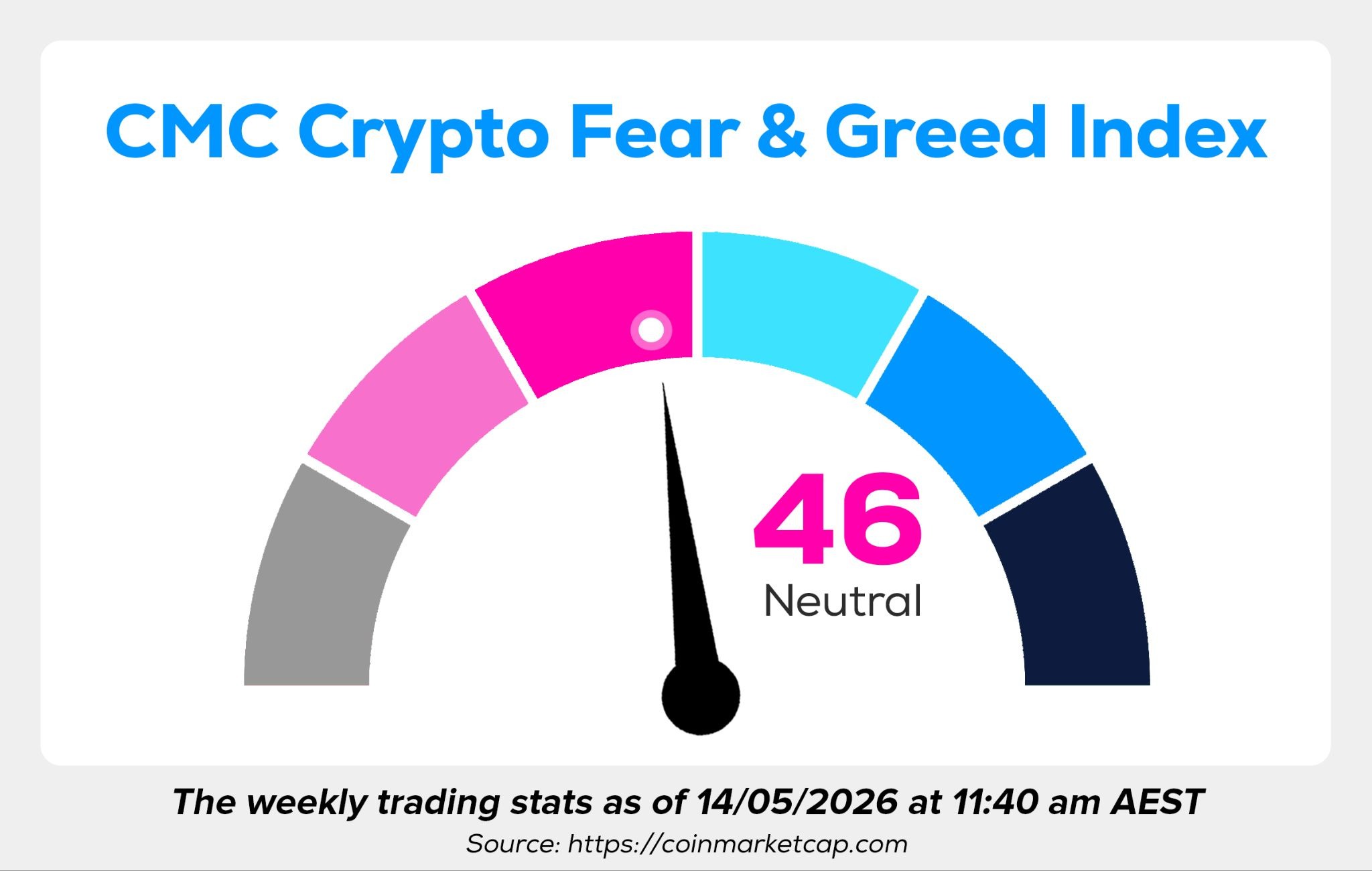
Bitcoin's 30-day implied volatility index remains pinned near 40%, levels last seen in late January, suggesting traders are not yet pricing in major near-term turbulence. The market is cautious but not panicking. Bitcoin is holding above US$81,000 (AU$111,788) but faces difficulty breaking higher if inflation and real rates keep rising. The short version: price is not broken. It is waiting for the macro to permit it to move.
Wall Street Keeps Showing Up
Charles Schwab, the brokerage giant that manages around US$12 trillion (AU$16.5 trillion) in client assets, began rolling out its spot cryptocurrency trading service for retail customers in the US this week, with an initial group able to trade Bitcoin and Ether on the Schwab Crypto platform. The launch had been telegraphed since last year, but telegraphed and delivered are two different things, and this week Schwab delivered.
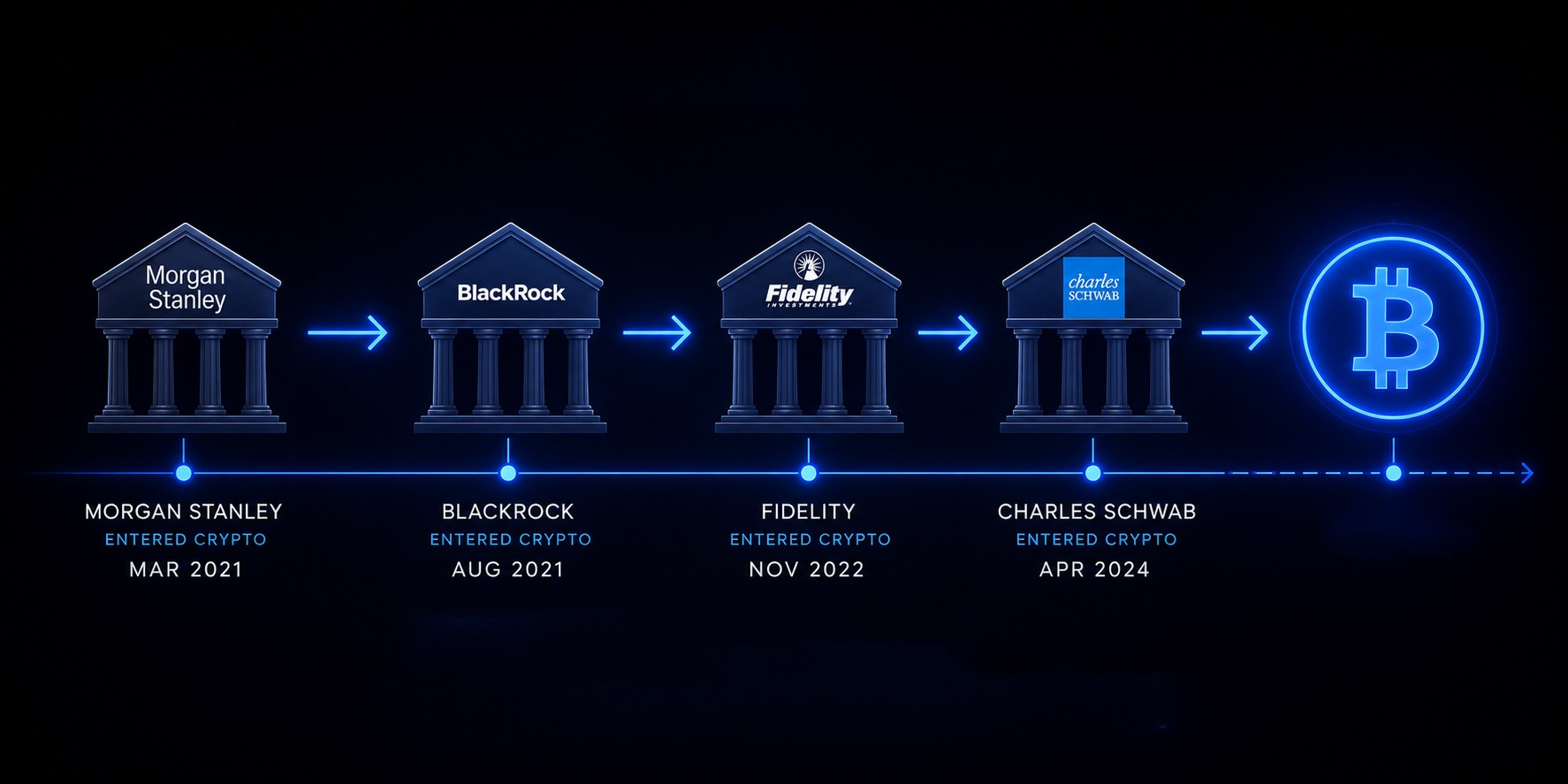
The details matter. Charles Schwab Premier Bank serves as the crypto custodian, while blockchain infrastructure provider Paxos handles trade execution and sub-custody. Schwab Crypto charges a 75-basis-point fee per trade, and the service is available in all US states except New York and Louisiana. The conservative product scope also says a lot. Schwab is starting only with Bitcoin and Ethereum, not a long list of tokens. That approach may appeal to investors who want crypto exposure through recognisable assets without stepping too far into the more speculative edges of the market.
The scale of what this means for the industry is hard to overstate. Last week, it was Morgan Stanley. This week, it is Schwab. As one of the largest brokerage firms in the world, Schwab could offer its roughly 35 million clients the opportunity to trade BTC and ETH in an environment they already recognise, rather than having to register with a standalone crypto exchange. That friction reduction is the real story. Every time a major traditional finance platform removes a barrier between its existing client base and direct crypto access, the addressable market for this industry expands. For platforms like Wayex that have been building compliant, regulated infrastructure for exactly this moment, the direction of travel has never been clearer.
The Tokenised Economy Is No Longer a Thesis
Joseph Lubin, the founder and CEO of Consensys and an Ethereum co-founder, said at Consensus Miami 2026 that tokenisation of virtually the entire global economy is now inevitable rather than experimental. That is a big claim, and Lubin is not the kind of person who makes it lightly. He argued that Ethereum's early design, enabling anyone to issue tokens without creating a new blockchain, has positioned it to benefit as traditional financial institutions move assets such as stablecoins, Treasuries and other real-world assets on-chain.
The numbers are starting to back him up. Tokenised US Treasuries hit a record US$15.35 billion (AU$21.2 billion) in value locked this week, as traders weighed the higher chances of a Federal Reserve rate increase and sought yield outside spot crypto. That milestone is worth sitting with. A year ago, tokenised Treasuries were a niche product discussed at conferences. Today, they represent a US$15 billion (AU$20.76 billion) corner of the market growing fast enough to influence capital flows across the broader crypto ecosystem. JPMorgan filed to launch a new tokenised money market fund this week, the latest sign that Wall Street is accelerating efforts to move traditional assets onto blockchain rails, following BlackRock's similar move just days earlier.
The pattern here is not subtle. The world's largest financial institutions are not experimenting with tokenisation anymore. They are racing each other to build it. Lubin traced tokenisation back to Ethereum's origins, describing it as the breakthrough that allowed anyone to issue assets without building a new blockchain. Now, that early design choice is paying off as financial institutions are increasingly moving their assets onto blockchain rails. What was a thesis twelve months ago is becoming infrastructure. The question is no longer whether the tokenised economy arrives. It is those who build the most important pieces of it.
Kevin Warsh Is Now the 17th Fed Chair
Kevin Warsh has been confirmed as the 17th leader of the Federal Reserve, becoming America's economist-in-chief at a moment of resurgent inflation, public discontent with the economy and unprecedented attacks on the Fed's independence. Warsh was confirmed in a 54-45 vote, mostly split along party lines, with only Democratic Senator John Fetterman of Pennsylvania crossing the aisle to vote in favour of Warsh's nomination. It was the most partisan vote for a Fed chair nominee in history.
The confirmation saga itself tells you something about the moment. Warsh's confirmation was stalled for some time by North Carolina Senator Thom Tillis, who demanded the Justice Department drop an investigation into Powell tied to testimony the Fed chair gave to Congress last year on cost overruns for a renovation project on the Fed's headquarters. The probe was eventually dropped, though the US attorney said she may reopen it if the Fed's inspector general finds evidence of malfeasance. The path to confirmation was messy, politically charged, and historically divisive. Welcome to the new Fed.
For crypto, the significance of this appointment cannot be understated. Warsh has publicly declared that digital assets are already woven into the fabric of America's financial services industry. He will also be the wealthiest Fed chair ever, with holdings well north of US$100 million (AU$138 million), and as Fed chair, he will have to divest himself of many of his investments under a strict new policy. Warsh has argued there is room to lower rates, but he also promised to use his own judgment in setting monetary policy and not to take orders from the White House. His first meeting as chair of the FOMC is scheduled for June 16-17. The Warsh era at the Fed begins now. The June meeting will be the first real test of what that era actually means for rates, for markets, and for crypto.
The Clarity Act Is One Vote Away
The Senate Banking Committee votes today on the Clarity Act, comprehensive crypto legislation that would give 50 million US crypto holders clear regulatory rules after years of uncertainty under the SEC and CFTC. This is the closest the industry has ever been to the regulatory clarity it has been pushing toward for the better part of a decade, and the vote is happening today.

The Clarity Act establishes clear rules separating which digital assets are securities and which are commodities, ending the jurisdictional confusion between the SEC and CFTC that has plagued the industry. The legislation protects software developers who publish code without controlling customer funds and preserves Americans' ability to self-custody their digital assets. For anyone who has watched projects get caught in regulatory grey zones, enforcement actions launched without a clear legal basis, or innovation leave the US for friendlier jurisdictions, this bill is the answer to years of frustration.
The remaining friction points are real. Senator Kirsten Gillibrand said the Clarity Act will not pass the Senate without a conflict-of-interest provision, while White House crypto director David Sacks called the markup a monumental step in making the US the crypto capital of the world. The bill needs 60 votes to clear the Senate, requiring Democratic support, before heading to the House for another vote. The conflict-of-interest debate, which centres on whether government officials should be prohibited from profiting from the crypto industry, is the last significant hurdle between committee approval and a full Senate floor vote.
The breakthrough came on May 1 when Senators Thom Tillis and Angela Alsobrooks reached a bipartisan compromise banning passive yield on stablecoins, while activity-based rewards tied to actual transactions remain permitted. That compromise brought Coinbase back to the table after the exchange had withdrawn its support earlier in the year. The industry is aligned, the White House is pushing, and the vote is today. For Australian Wayex users, the US regulatory outcome matters enormously. A clear, statute-backed framework in the world's largest financial market sets the standard that every other jurisdiction, including Australia, will eventually measure itself against.
The Australian Budget and Your Crypto
If you missed our special edition earlier this week, this one is worth going back for. Treasurer Jim Chalmers delivered the most significant overhaul of the Australian capital gains tax in 25 years, and crypto holders are squarely in the crosshairs. The short version is that the 50% CGT discount that has applied to assets held for more than 12 months since 1999 is being replaced with a cost base indexation model from 1 July 2027, and a new 30% minimum tax on real capital gains is being introduced on top of that.
The reason this hits crypto harder than most other asset classes comes down to how crypto actually generates gains. Most long-term returns on property and shares have a genuine inflation component, which means indexation does meaningful work in reducing the taxable amount. Crypto gains are driven by value appreciation, not inflation. Indexation shaves a few percentage points off your cost base. The 50% discount was halving your taxable gain. The difference in effective tax rate on the same position, the same investor, and the same holding period is roughly double under the new rules.
The practical action right now is straightforward. Any disposal that settles before 1 July 2027 falls entirely under current rules. If you have held for more than 12 months, the 50% discount still applies. That is a 14-month window to get clear on your position, speak to your accountant, and make a considered decision rather than a reactive one. Your full transaction history and portfolio data are available in your Wayex account, which is your starting point for any conversation with your accountant about whether acting inside that window makes sense for your situation. We are not in the business of giving tax advice, but we are in the business of making sure you have the information and the tools to make informed decisions. The window is open. Use it wisely.
Founder’s Corner
This week felt different. Not because of the price action, which was honestly pretty unremarkable with Bitcoin hovering either side of US$81,000 (AU$111,788) all week. It felt different because of what was happening around the price. The Fed chair transition, the Clarity Act vote, Charles Schwab opening spot crypto to 35 million retail clients, JPMorgan and BlackRock racing each other to tokenise money market funds. These are not speculative signals. They are structural shifts, and they all landed in the same seven-day window.
The one I keep coming back to is the Clarity Act. I have watched this industry operate in regulatory grey zones for years, seen companies relocate offshore, watched talent leave for jurisdictions with clearer rules, and heard the same refrain from institutional investors about needing statutory certainty before they can deploy serious capital. Today, that changes, or at least it gets one significant step closer to changing. For Australian users, the US getting this right matters beyond its borders. The global standard for crypto regulation is set in Washington, and everything else follows.
The Budget news we covered in our special edition this week is the harder conversation closer to home. The tax changes are real, the window is shorter than it feels, and the best thing anyone sitting on meaningful unrealised gains can do right now is get across their position and talk to their accountant. Your transaction history is in your Wayex account. That is where to start. We will keep sending updates as things develop on both the regulatory and tax front. The weeks and months ahead are going to matter.
Richard Voice, Co-Founder, Wayex



**All information in this article is for informational purposes only. You should not construe any such information or other material as legal, tax, investment, financial, or other advice. Nothing contained herein shall constitute a solicitation, recommendation, endorsement, or offer by Wayex to invest, buy, or sell any coins, tokens, or other crypto assets. Any descriptions of Wayex products or features are merely for illustrative purposes. Past performance is not a guarantee or predictor of future performance. The value of crypto assets can increase or decrease, and you could lose all or a substantial amount of your purchase price. It is essential for you to do your research and due diligence to make the best possible judgement, as any purchases shall be your sole responsibility.