How is it the end of 2025?

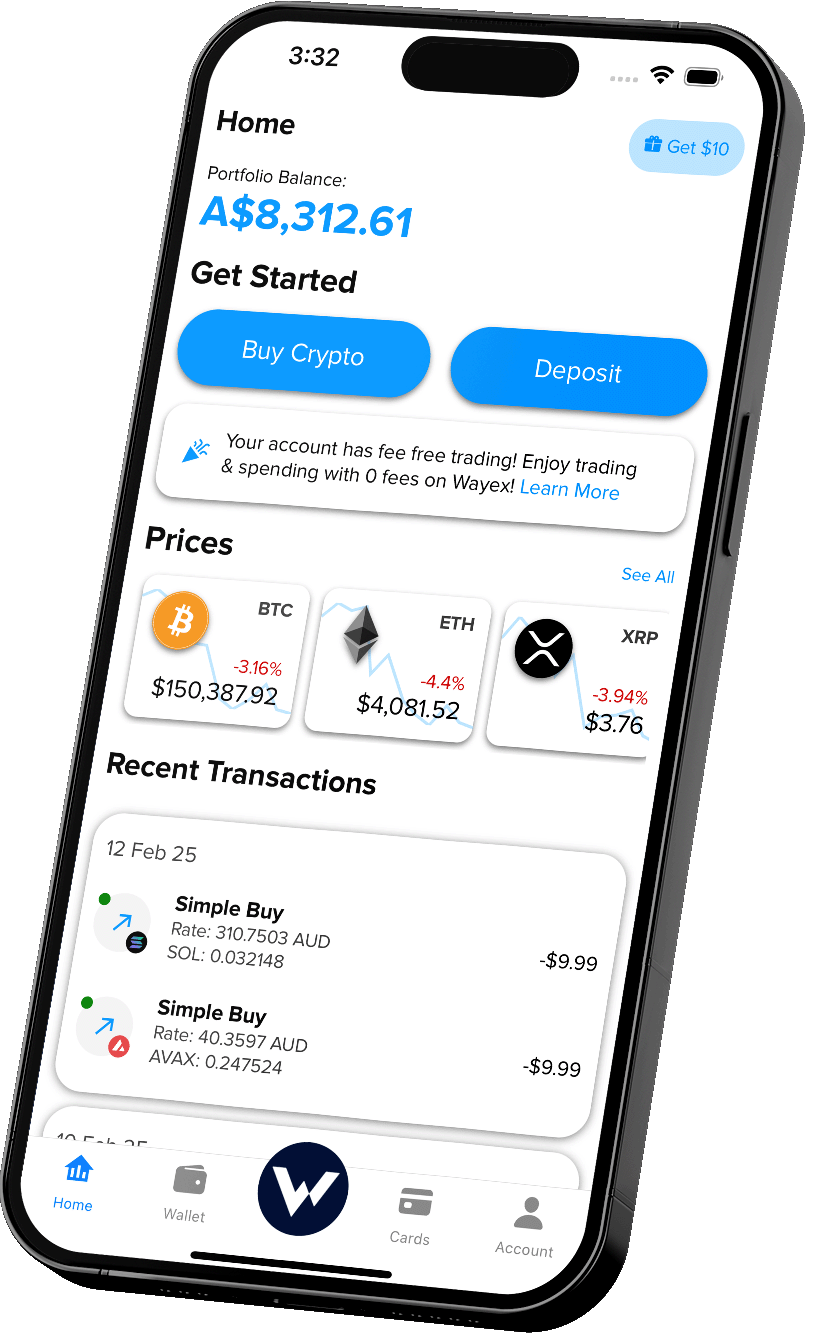
As we reminisce on the year that has been and look to the future, this week’s Wayex Weekly Wrap captures a market caught between volatility and long-term momentum, as Bitcoin whipsawed on macro jitters, altcoin season once again failed to arrive, and legal and regulatory pressure continued to shape the Solana ecosystem. Against that backdrop, Wayex marked a significant milestone with the launch of Wayex Global, expanding fiat (USD, EUR, BRL, MXN) on- and off-ramps to 160 countries. Wayex also launched a Stablecoin Visa card, now live in 18 markets including the US, Brazil and Argentina. This week, institutional adoption also took centre stage, with Visa rolling out USDC settlement on Solana and a16z outlining why stablecoins and crypto-native infrastructure are becoming the backbone of the following financial cycle. From Hong Kong's cautious first crypto IPO to class action lawsuits and shifting expectations for 2026, the theme remains clear: short-term price action is noisy, but the structural foundations of crypto, particularly stablecoins, payments and regulation, are being built in real time.
A quick note to our readers: the Wayex Weekly Wrap will take a short break over the Christmas period and return in the New Year. Thank you for your continued support throughout the year, and we look forward to sharing more insights with you in 2026.
What's Happening On The Wayex Platform This Week
.jpg)
Wayex Goes Global To Meet The Next Generation of Crypto Fans
We are pleased to announce that Wayex Global is now live! This launch marks a significant step forward as we expand the Wayex ecosystem to meet the needs of the next generation of crypto users and support the global adoption of digital assets.
Wayex Global introduces two core products: A global on/off-ramping account in some of the most widely used currencies worldwide (USD, EUR, BRL, MXN), and a stablecoin Visa Debit Card, which can be used at over 200M+ merchants worldwide.
Our on/off ramping solution extends Wayex to over 160 countries, offering instant fiat rails that bridge traditional finance and blockchain, making it easier to move, spend, and manage digital dollars worldwide. Meanwhile, the Wayex Global Visa Card is now available in 18 countries, allowing users to spend their crypto seamlessly wherever Visa is accepted.
None of this would be possible without the continued support of our community. Your trust and passion drive us to keep building, innovating and pushing crypto forward. We believe borderless banking and borderless payments are the future, and we’re grateful to have you with us as we build it together.
For Australian-based exchange customers, everything will remain the same for now, but we are still working on new products for you while continuing to improve what has already been built.
BTC Plunges As The Market Gets The Jitters
Bitcoin briefly surged above US$90,000 (AU$136,333) during early US trading on Wednesday before reversing sharply, falling back to the US$87,000 (AU$131,789) area within minutes as broader risk markets sold off. The move coincided with heavy losses in artificial intelligence stocks, with Nvidia, Broadcom and Oracle down 3%–6%, dragging the Nasdaq lower by more than 1%. Sentiment around the AI trade was further hit after reports that Blue Owl Capital pulled out of funding a US$10 billion (AU$15 billion) Oracle data centre project in Michigan, reinforcing the risk-off move that spilled into crypto.
The whipsaw action triggered more than US$190 million (AU$287 million) in crypto derivatives liquidations over four hours, including US$72 million (AU$109 million) in long positions and US$121 million (AU$183 million) in shorts, according to CoinGlass. Bitcoin was last trading near US$87,300 (AU$132,224), down 0.5% over 24 hours after being up more than 3% earlier in the session. Hunter Rogers, co-founder of Bitcoin Yield Protocol TeraHash, told CoinDesk that shrinking liquidity is leaving the market vulnerable to even modest selling pressure, describing conditions as “an exhausted market.” Rogers added that holding the US$80,000 (AU$121,168) –US$85,000 (AU$128,741) support zone will be critical in determining whether bitcoin sees fresh lows or a more sustainable rebound.
Visa Stablecoin Strategy: Circle And Ripple First Up
Visa has announced the launch of stablecoin settlement services for its US banking network, enabling financial institutions to settle back-end payment flows using Circle's USDC on the Solana blockchain. Early participants include Cross River Bank and a16z-backed Lead Bank, with the service set to expand further through 2026. Visa said the move reflects direct demand from banks preparing to move real payment activity on-chain. "Visa is expanding stablecoin settlement because our banking partners are not only asking about it, they're preparing to use it," said Rubail Birwadker, Visa's Global Head of Growth Products and Strategic Partnerships. He added that institutions are seeking "faster, programmable settlement options that integrate seamlessly with their existing treasury operations," positioning USDC on Solana as a bank-ready alternative to legacy rails.
The expansion comes amid a shifting US regulatory environment following the passage of the GENIUS Act in July, the country's first federal stablecoin framework, as the US$300 billion (AU$454 billion) stablecoin market is projected to reach US$2 trillion (AU$3 trillion) by 2028. Alongside US settlement, Visa is an early design partner in Circle's Arc Layer 1 blockchain and plans to operate a validator once the network goes live, further deepening its stablecoin infrastructure strategy. Visa's choice of Solana-native USDC underscores rising institutional appetite for the network, following recent Solana-based tokenisation initiatives from JPMorgan, State Street and Galaxy, and the launch of Jump Crypto's Firedancer validator on mainnet, aimed at unlocking throughput of up to one million transactions per second.
A16z Talks 2026 Crypto Trends
Andreessen Horowitz, commonly known as a16z, released its report titled “17 things we’re excited about in Crypto for 2026”, written by Miles Genning, their Crypto Policy Head and General Counsel. This blog is nothing to sneeze at, as a16z is one of the most influential venture capital firms in crypto. a16z has backed some of the most important companies of the last two decades, including Facebook, Coinbase, Stripe, and Airbnb. In its blog post, a16z argues that the industry is moving beyond simply tokenising traditional financial products toward more crypto-native products such as perpetuals, on-chain debt origination, programmable settlement, and stablecoins as ledger upgrades for legacy banking systems. This model allows institutions to innovate without replacing decades-old infrastructure, while enabling entirely new behaviours including agent-to-agent payments, real-time settlement, privacy-preserving finance and automated portfolio management. In this framework, stablecoins are no longer just digital cash; they are becoming the base layer for how value moves online.
That shift is already visible in the numbers. Stablecoins processed an estimated US$46 trillion (AU$69 trillion) in transaction volume last year alone, dwarfing PayPal by more than 20x, rivalling Visa at nearly 3x its volume, and rapidly closing in on ACH, the backbone of US bank transfers. The core technology is largely solved: stablecoins move globally in seconds for less than a cent. The remaining bottleneck is on- and off-ramps, or how digital dollars connect to the payment systems people already use. This is something that Wayex Global is solving. And like the team at A16z, we can’t wait to see what happens next.
Altcoin Season, Really, Really Didn’t Happen This Year
As seasoned crypto traders, you have heard from the market and from the team here at Wayex that a large contingent subscribes to the “Alt-Season is a 4-year cycle” theory. And according to most 4-year cycle theorists, this was due this year. But, alas, it was not to be. Crypto investors have become frustrated as altcoins continue to underperform Bitcoin, leading many to question whether altcoin season is over or delayed. Macro investor Raoul Pal believes the delay is structural, not bearish. He argues that debt maturity extensions during 2021–2022 stretched the traditional four-year crypto cycle into a five-year cycle, reducing liquidity during the period when altcoins usually rally. Pal points to the ISM index as a key signal, explaining that when it rises above 50, Bitcoin and Ethereum have historically moved higher, with altcoins following later. He estimates the liquidity cycle is more likely to peak in Q2 2026, stating, “Our best guess remains well into 2026, probably around Q2.” Pal has also rejected claims that crypto is entering a long bear market, saying the next significant move is still ahead.
Other analysts share a similar view. Tom Lee has also highlighted the link between the ISM index moving above 50 and substantial gains in Bitcoin and Ethereum. Meanwhile, trader Ash Crypto points to technical data showing that altcoins, excluding the top 10 coins, are sitting on long-term support levels similar to those seen before previous rallies. Ash says major Altcoin runs usually begin only after the US Federal Reserve ends quantitative tightening, when liquidity slowly returns to risk assets. He also warns that altcoin rallies rarely start smoothly, often following periods of sideways movement, sharp drops and liquidations. With the Altcoin Season Index currently at 37, the data suggests the market is still far from a true altcoin season, supporting the view that a broader rally may not arrive until 2026.
Will Altcoin FINALLY have its moment in 2026? Let’s see.
Hashkey Has Tentative First Day Of Trading In Hong Kong
HashKey Holdings’ market debut delivered a cautious signal for Hong Kong’s push to position itself as a global digital-asset hub. The city’s largest licensed crypto exchange operator raised HK$1.6 billion (AU$311 million) in the territory’s first crypto-native IPO. Still, trading interest was muted as global equity and crypto markets remained firmly stagnant. Bitcoin continues to struggle amid tighter financial conditions, profit-taking and lingering uncertainty around interest rates. At the same time, Hong Kong equities have also come under pressure on concerns over China’s growth outlook. The subdued response reflects broader market caution rather than company-specific issues, testing whether regulatory clarity alone is enough to attract strong investor demand during a down cycle.
The outcome matters because Hong Kong has positioned itself as mainland China’s offshore testing ground for digital assets, building regulated frameworks for exchanges, stablecoins, custodians and service providers. HashKey chairman and CEO Xiao Feng argued the listing demonstrated that a compliance-first approach offers long-term durability, particularly as clearer legislation emerges. However, analysts such as Dickie Wong of uSmart Securities have warned that even licensed players face headwinds from weak markets, rising competition and regulatory constraints. Despite dominating more than 75% of Asia’s onshore digital-asset trading volume in 2024 and managing nearly HK$20 billion (AU$3.8 billion) in client assets, HashKey remains loss-making, highlighting the challenge of turning regulatory leadership into sustained profitability. The IPO underscores a key question for Hong Kong: whether it can translate regulatory credibility into global capital flows, or whether market cycles will continue to limit its ambition to reclaim regional digital-asset leadership.
Class Action Lawsuit Involving Pump.Fun, SOL Proceeds
Pump.fun and Solana are facing a potentially lengthy legal battle after a US court permitted plaintiffs to file a second amended complaint in an ongoing class action lawsuit. Judge Colleen McMahon approved the request after plaintiffs said they had obtained significant new evidence from a confidential informant, despite the defendants' attempts to dismiss the motion on procedural grounds. The lawsuit covers investors who purchased Pump. Fun-launched tokens from March 2024 onwards and suffered out-of-pocket losses. The court ruled the proposed amendments were substantial enough to proceed, delaying or denying related defence motions and effectively resetting parts of the case once the new filing is submitted.
According to court documents, the new allegations span violations of securities laws, RICO claims, and unjust enrichment, arguing that what appeared to be an automated, fair marketplace was structurally tilted in favour of insiders with privileged access to Solana's validator infrastructure and Jito Labs' transaction-ordering tools. Plaintiffs allege that insiders were able to buy newly launched tokens at the lowest prices and trigger rapid price increases through Pump. Fun's bonding curve mechanism, and then sell into retail demand. The alleged evidence includes internal chat logs involving Pump: fun staff, Solana Labs engineers, Jito Labs executives and other parties. The case, which names Pump.fun, its founders, Solana Labs, the Solana Foundation and several executives, is expected to have broader implications for the Solana ecosystem as it moves into its next phase.
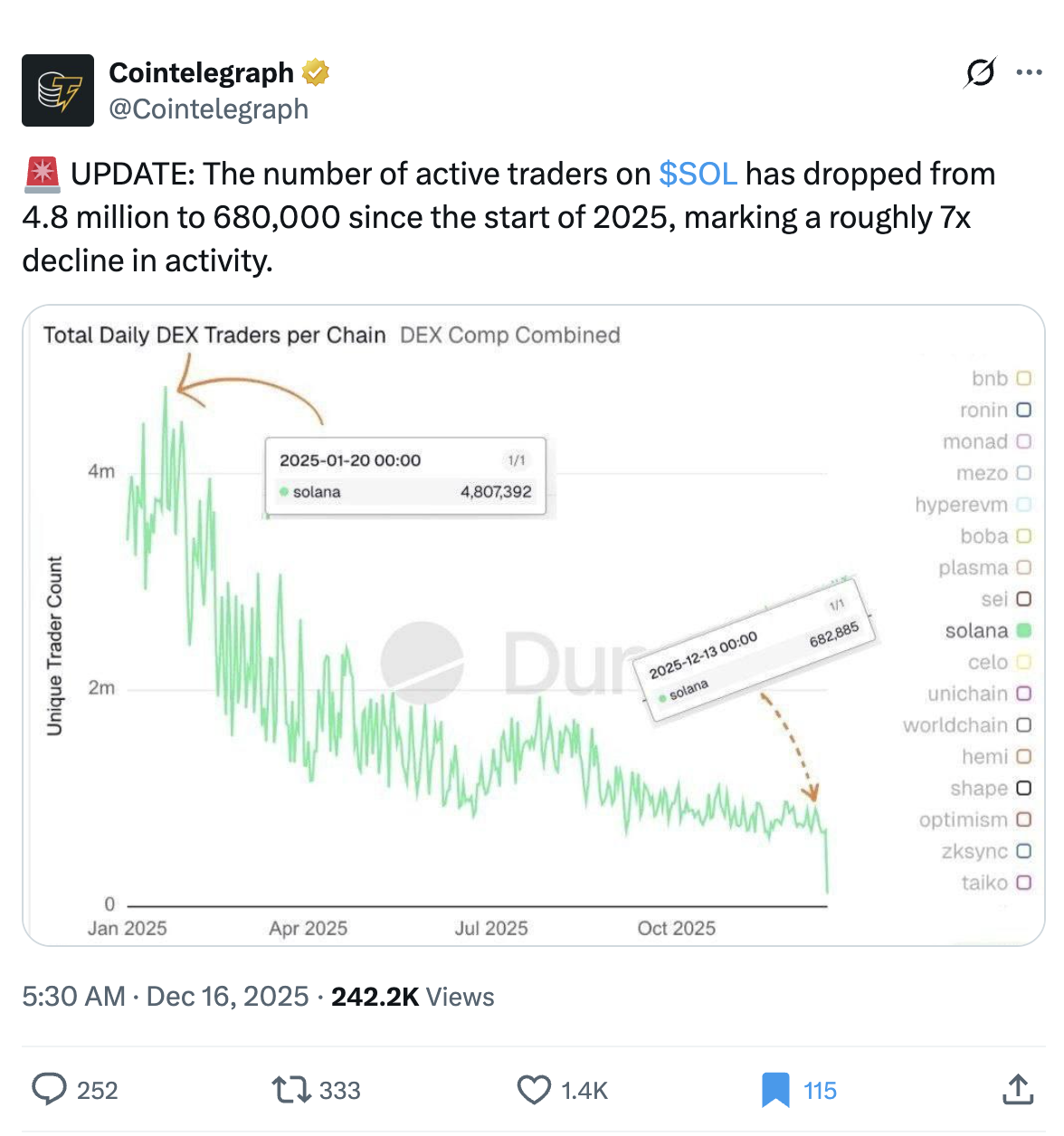
Solana has also experienced a notable drop in trading volume, with unverified speculation on Crypto Twitter attributing the losses to the ongoing class-action lawsuit.
What We Are Watching In 2026: Pricing, Stablecoins And Regulations
Crypto is heading into a volatile yet structurally positive 2026, according to Sean Stein Smith, who outlined his predictions for the year ahead in Forbes. He argues the focus will shift away from speculation and towards real-world integration, with stablecoins fading into the background as everyday payment infrastructure, tokenised real-world assets driving the next wave of adoption, and regulatory clarity in some jurisdictions rewarding fast-moving firms. Bitcoin is expected to remain volatile despite growing institutional support, while most failures will continue to stem from human error rather than broken technology. The question for 2026, for those who are trying to predict the future, is whether 2026 is the year crypto proves it can operate responsibly at scale?
The answer awaits us in 2026. Not to diminish Forbes's reporting, we too are excited about what's next and the potential of crypto. What we are laser-focused on in 2026 is stablecoins and token price volatility. In stablecoins, it's about who will win the stablecoin race, as countries like the U.S., Hong Kong, Japan and the United Kingdom vie to be the capital of the next generation of financial markets.
For price volatility, it's about where the market favourites like ETH and BTC can go and if altseason is finally going to come around.
Things That Made Us Laugh This Week

Founders Corner
This week’s volatility, the $90k rejection and the sudden ripple effect of AI stock jitters are a classic case of the "market" being distracted by the wrong signals. While traders obsess over 4-year cycles and the elusive "Alt-Season," the structural reality is running in the opposite direction. History shows that during the transition from speculative frenzy to utility, as in the late 90s internet, the loudest noise usually comes from the dying gasps of the old guard’s volatility.
The industry is currently undergoing a much-needed cleanup, as far as I can see. The Pump.fun lawsuits and the regulatory shifts in Hong Kong aren't signs of a particular “bear market”. Yet. But they could be seen as signs of a maturing ecosystem. We are moving away from the "Casino" era of crypto toward a period of institutional growth. When stablecoins process US$46 trillion in volume, rivalling Visa’s, I see the debate over whether this technology has "intrinsic value" as essentially over. The real story isn't the price of Bitcoin today; it’s the fact that major financial institutions are now treating on-chain settlement as an inevitability rather than an experiment.
I am most excited this week to finally talk about the launch of Wayex Global. It is crazy and surreal to think that Wayex can now be downloaded in 160 countries and used for fiat on/off-ramping, and that those in the 18 lucky countries who are experiencing our new stablecoin Visa card are enjoying what it has to offer so far.
We built Wayex Global because the current financial system is effectively a "walled garden" that was never designed for an internet-native world. Historically, moving value across borders required a Rube Goldberg machine of correspondent banks, manual reconciliations, and arbitrary 48-hour delays, the financial equivalent of 1990s dial-up. While legacy rails have hit their ceiling, stablecoins are now processing trillions in volume, proving they are no longer just a "crypto feature" but the new base layer for global commerce. We didn't build Wayex Global just to be another wallet; we built it to be the "broadband" upgrade for your money. By integrating local rails like PIX in Brazil and SEPA in Europe directly with stablecoin liquidity, we are creating a world where your dollar, euro, or real can move as fast as a message on WhatsApp or Messenger.
In the history of finance, the winners have always been those who removed the most friction, and Wayex Global and Wayex Australia will always aim to achieve this.
I hope everyone has a happy and safe holiday season as we head into 2026.
Richard Voice, Co-Founder, Wayex
**All information in this article is for informational purposes only. You should not construe any such information or other material as legal, tax, investment, financial, or other advice. Nothing contained herein shall constitute a solicitation, recommendation, endorsement, or offer by Wayex to invest, buy, or sell any coins, tokens, or other crypto assets. Any descriptions of Wayex products or features are merely for illustrative purposes. Past performance is not a guarantee or predictor of future performance. The value of crypto assets can increase or decrease, and you could lose all or a substantial amount of your purchase price. It is essential for you to do your research and due diligence to make the best possible judgement, as any purchases shall be your sole responsibility.